
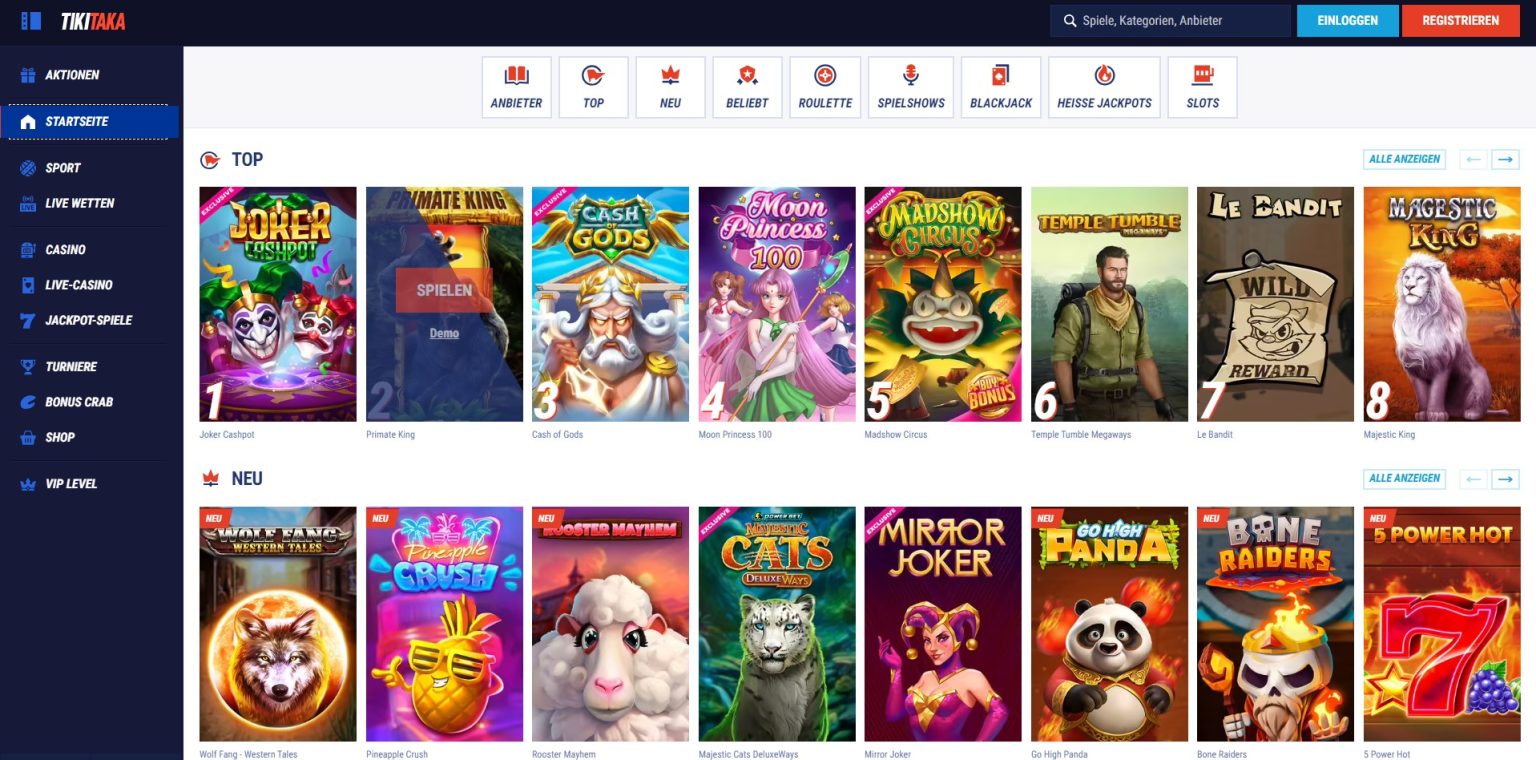
I’ve gotten locked out of more accounts than I can count, and whenever the recovery screen showed up, I saw it like a simple reset button. I never paused to consider if those recovery options were really protected or just easy falsehoods. When I looked into the mechanics behind password resets, I discovered weak security questions, vulnerable to interception email links, and verification flows that users often skip. My goal is not to frighten you. I aim to share what I’ve learned so that the next time you must recover your login at Tikitaka Casino, you’ll be clear on what protects your finances and identity. The reality of password recovery is messier than a forgotten-password link, and I’ll guide you through what I now understand.
How exactly Tikitaka Casino Constructs Its Password Reset System
After looking at the recovery flow at Tikitaka Casino, I found they’ve implemented several checks that make an attacker’s job much harder. They use document-based verification with time-limited reset links and demand re-authentication for sensitive changes. Their support team doesn’t lean on a single weak question; they verify against the KYC documents I submitted during registration. I’ve also noticed that they log recovery attempts and mark unusual patterns, which adds a behavioral layer most platforms omit. The system has flaws, but it’s designed with the assumption that email and SMS can be compromised. That attitude is evident in the design. Being aware of how they handle recovery assures me that my account won’t be handed over because of a single leaked code or a smooth-talking caller. It’s the kind of realistic, layered approach I now seek everywhere.
Password Reset Emails Are a Double-Edged Sword
The Deceptive Email I Almost Believed
I once got an email that perfectly mirrored a reset request from a service I utilized daily. The login page it pointed to seemed identical, and I only escaped trouble because I noticed a misspelled URL. That taught me reset links are only as secure as my ability to spot deception. Phishing kits are complex, and attackers can generate genuine reset emails while forwarding a fake one at the same time. Even two-factor authentication won’t shield me if I knowingly submit my credentials on a fake site. I now never click unexpected reset links; I visit the site directly by entering the address. This habit has rescued me more than once.
Fortifying the Inbox
Because email is the primary key to most recovery processes, I started treating my inbox with financial-level care tikitaka.edu.pl. więcej informacji I turned on hardware two-factor authentication, removed outdated recovery numbers, and frequently examine login activity logs. I also employ separate email addresses for different purposes; my Tikitaka Casino account is tied to a dedicated email isolated from social media. If a breach occurs in one area, the damage remains limited. I deactivated automatic forwarding rules that attackers sometimes configure after a compromise. Making the inbox fortress-strong isn’t paranoia. It’s a reasonable answer to a system that relies heavily in a single inbox.
User Verification as the Primary Defense of Defense
Know Your Customer and Document Submission
What I Learned Uploading My ID
When I signed up at Tikitaka Casino, the verification required a government ID and proof of address. At first, I considered it a bit intrusive, but I soon realized this step turns password recovery trustworthy later. If I lose access, support can confirm my identity against those documents, adding a human checkpoint that automated recovery can’t easily bypass. The process was straightforward, and I appreciated that uploaded files were encrypted and managed under strict data protection rules. This layer of verification reassures me that not just anyone can regain control of my account; they’d need to duplicate my submitted documents. It converts KYC into a recovery asset I truly value.
Why I Began Questioning Password Recovery Systems
I previously assumed every site stored passwords safely and designed recovery with my safety in mind. That belief crumbled when I got a password reset email I never asked for. It appeared genuine, but I recognized anyone with entry to my email could hijack any connected account. The recovery flow, meant as a safety net, had turned into a single point of failure. I investigated common practices and learned many platforms still lean on weak fallbacks like security questions with answers anyone can dig up. When I signed up at Tikitaka Casino and checked their login setup, I focused carefully because I’d already seen the cracks in other systems.
Recovery Code Issues and Account Lockouts
I discovered the difficult way that backup codes printed and forgotten can get lost or deteriorate. At one point, I misplaced a recovery kit and endured a tense week confirming my identity to support. That experience showed me to keep codes in at least two forms: a paper version in a safe box and an encrypted digital copy in my credential manager. I also verify my recovery codes during quiet times, not when stressed out. Many sites, including Tikitaka Casino, provide one-time backup codes when enabling two-factor authentication, and ignoring them is a blunder I will not make again. Login issues are stressful, but validated recovery processes turn a crisis into a minor hassle.
The Plain Facts About Password Managers
I shunned password managers for years, worrying about a single point of failure. My view shifted after I recognized I was reusing weak passwords across many sites, transforming one breach into a cascade. A dependable password manager generates and keeps unique complex passwords, often with zero-knowledge encryption. I still had to embrace that losing the master password could permanently lock me out, so I made a physical emergency sheet in a safe. The reality is that a manager drastically reduces the need for recovery options because I rarely misplace site passwords. This reduces the attack surface, and I sleep better knowing that even if another site leaks credentials, my Tikitaka Casino password remains unique and safe.
2FA as a Safety Net
Authenticator App vs. SMS-Based Codes
After my SIM swap scare, I transferred every possible account to an auth app or physical security key. These tools generate one-time codes on the device, making remote interception extremely difficult. The sense of security is enormous. I store backup codes in a physically secure place so I can regain access if my phone is misplaced. For a platform like Tikitaka Casino, where real money is at stake, using an authentication app creates a far stronger safety net than SMS. I encourage everyone to examine their security settings and migrate away from text-based codes. The minor hassle of opening an app is a reasonable exchange for preventing the most common recovery attacks.
Text Message Recovery and the Increase of SIM Hijacking
I once believed SMS recovery was dependable until I found out how easily an attacker can compromise a phone number through SIM swapping. A criminal tricks a carrier to transfer my number to a new SIM, and within minutes they obtain every reset code sent by text. I’ve seen countless stories of drained crypto and payment accounts where SMS was the only barrier. While carriers have improved, social engineering still operates alarmingly well. Whenever I see SMS as the primary recovery method, I move to an authenticator app. Text messages are just too exposed to interception and SIM fraud for me to trust them with high-value accounts today.
The Dangerous Comfort of Security Questions
Security questions feel personal, but I have discovered them to be one of the weakest links in recovery. When a site requires my mother’s maiden name or my childhood street, I know that information may be present on social media or in public records. I once helped a friend recover an account and spotted his favorite pet’s name in an old Facebook post. That moment solidified my distrust of knowledge-based authentication. Attackers collect data efficiently, and static life facts are comparable to storing a key under the rug. I now treat security answers as extra passwords, filling them with random strings stored securely. That undermines their intent but dramatically improves security.